
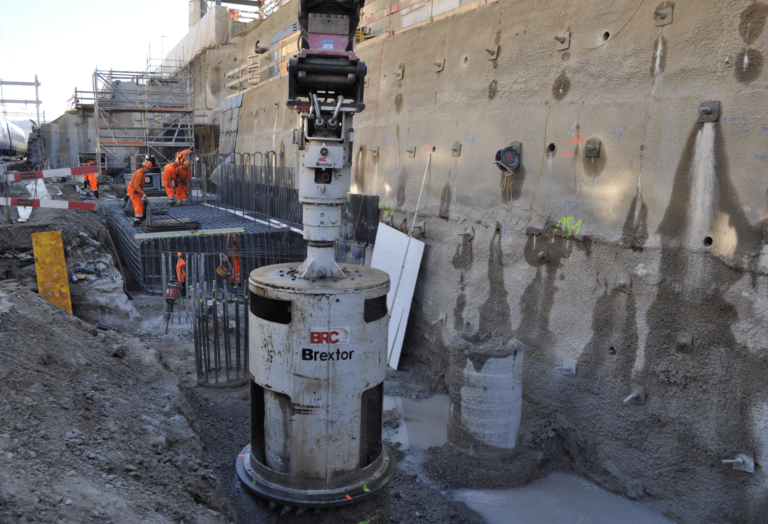
When you need to keep your site from caving in, using a contiguous pile shoring system is often the most sensible path forward. It involves drilling a line of concrete columns closely together, which creates a stable boundary wall for your basement. You do not need the massive space that sloped excavation requires, so it fits perfectly into cramped city spots. The setup is quite fast, and it works well for most projects where you are not expecting a huge amount of water pressure.
Handling the drilling rig
You really need an operator who knows exactly how to keep the drill bit perfectly vertical when starting the holes. If the rig tilts even a little bit, the gaps between your contiguous pile shoring columns get wider and you lose that structural stability. Teams usually alternate by drilling every other hole first to let the concrete set before they fill the remaining spaces. This approach helps maintain the integrity of the soil wall while your crew completes the rest of the pile installation tasks.
Steel cage depth rules
Putting the steel cages inside the wet concrete is a tense moment for the crew on site every single time. A contiguous pile shoring wall relies on those steel bars to handle the side pressure of the earth, so they must be placed deep enough. If the cages are not centred correctly, you might get corrosion on the steel, which eventually weakens the whole foundation system. Take your time to measure the depth precisely before pouring to avoid those nasty problems that show up years later.
Managing the site debris
Once you finish drilling and pouring all the piles, you are going to be left with a ton of extra soil. You need a solid plan to haul this waste away so it does not block the path for other equipment moving around. Some contractors like to crush and reuse the concrete from the contiguous pile shoring process if they have the right machinery handy. It keeps the area cleaner, saves on trucking costs, and helps your site stay organised during the intense excavation phase.
Adding the top beam
Just by connecting everything with a horizontal hood the whole wall dissolves as if it were a solid unit. This beam prevents individual piles from shifting or moving freely until deep excavation covers are installed, when the soil hazard reaches a fully elevated level. You should make sure this beam is well-reinforced with thick steel bars to keep the entire contiguous pile shoring system locked in tight. It is the final step that actually turns a bunch of separate columns into a very reliable retaining wall.
Monitoring for wall movement
Even after the wall is built and you start digging, keep a close eye on any signs of tilting or shifting. A contiguous pile shoring setup is quite rigid, but it can still show small movements if the soil conditions are worse than you originally expected. Use simple survey tools to check the wall alignment at least twice a week during the excavation. Catching a tiny shift early is a lot cheaper than trying to shore up a wall that has already moved too far.
Conclusion
Selecting an earth retention method is a big decision that impacts both the safety and total cost of your foundation. You can find technical resources for your engineering team at Brextor.com to help you compare different shoring options for your specific place. Estimating floor makeup and structural loads early helps maintain a clean project schedule while avoiding common mesh problems. We offer to have an authorised foundation professional review your plans and discuss a first-class way to secure your subsequent massive construction undertaking today.